The conversation becomes the build.
Drop in the audio of your discovery call. SF Threads transcribes it, extracts the requirements buried in the back-and-forth, drafts a structured build plan, and hands every thread of work to an agent that runs it. SF Braids weaves the threads. The customer goes home; the build is already underway.
Sources in. Threads out.
Drop the audio file from your client kickoff. Or drop a transcript. Or scrape their website. Or upload their database schema. SF Threads fans out a discovery agent across every input, extracts the table-stakes (stakeholders, success criteria, integrations, constraints), and runs a 7-gate readiness checklist. When every gate is green, you're ready to plan.
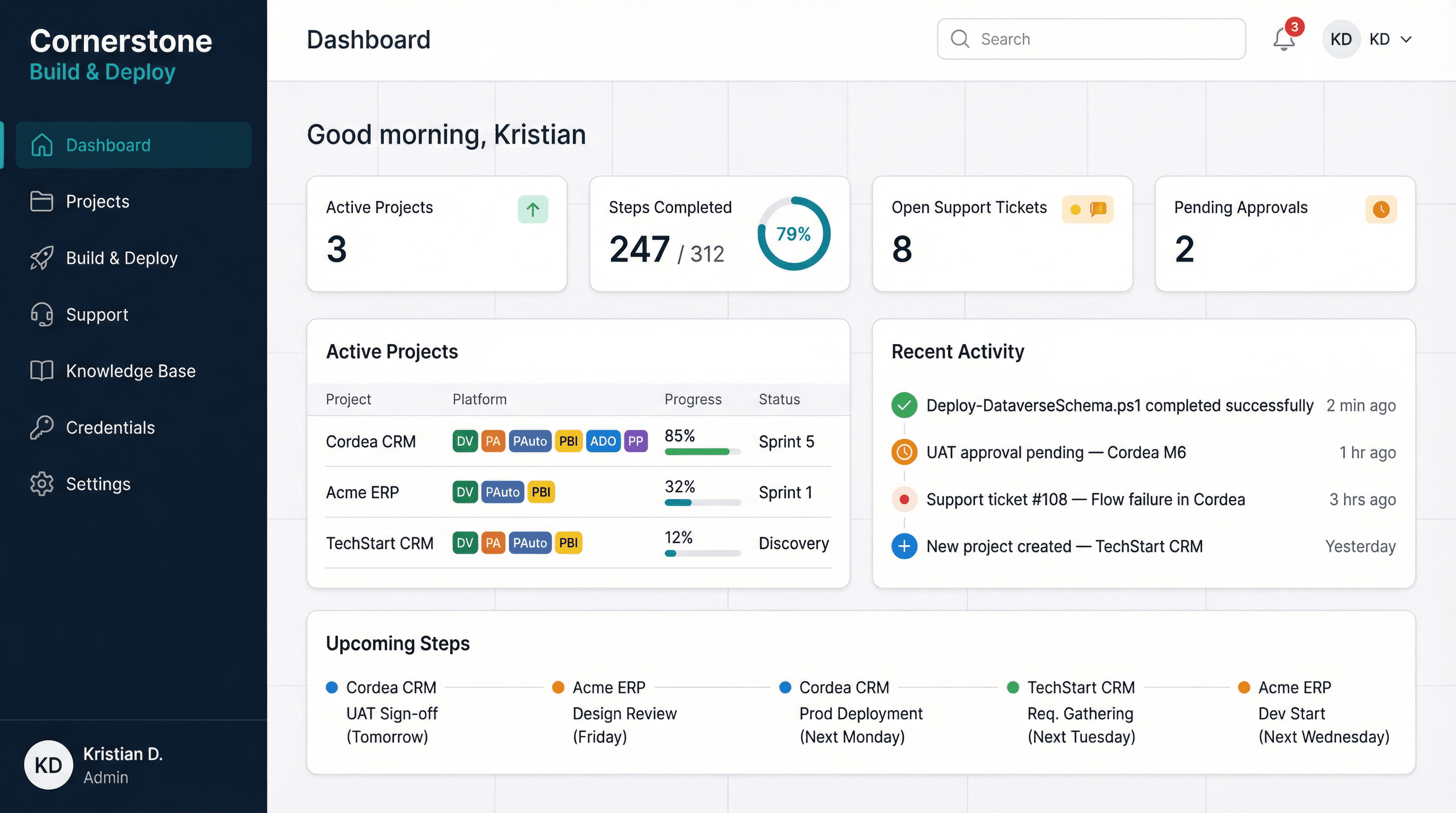
Generate · Review · Assemble · Repo.
From a complete discovery, Threads drafts a real proposal — not a doc, an actual structured plan with epics, stories, tasks, dependencies, and architecture decisions. You review and edit. You approve. The plan compiles itself into a fresh git repo with the scaffolding, milestones, and CI already in place.
Milestones tick. Linear stays in sync.
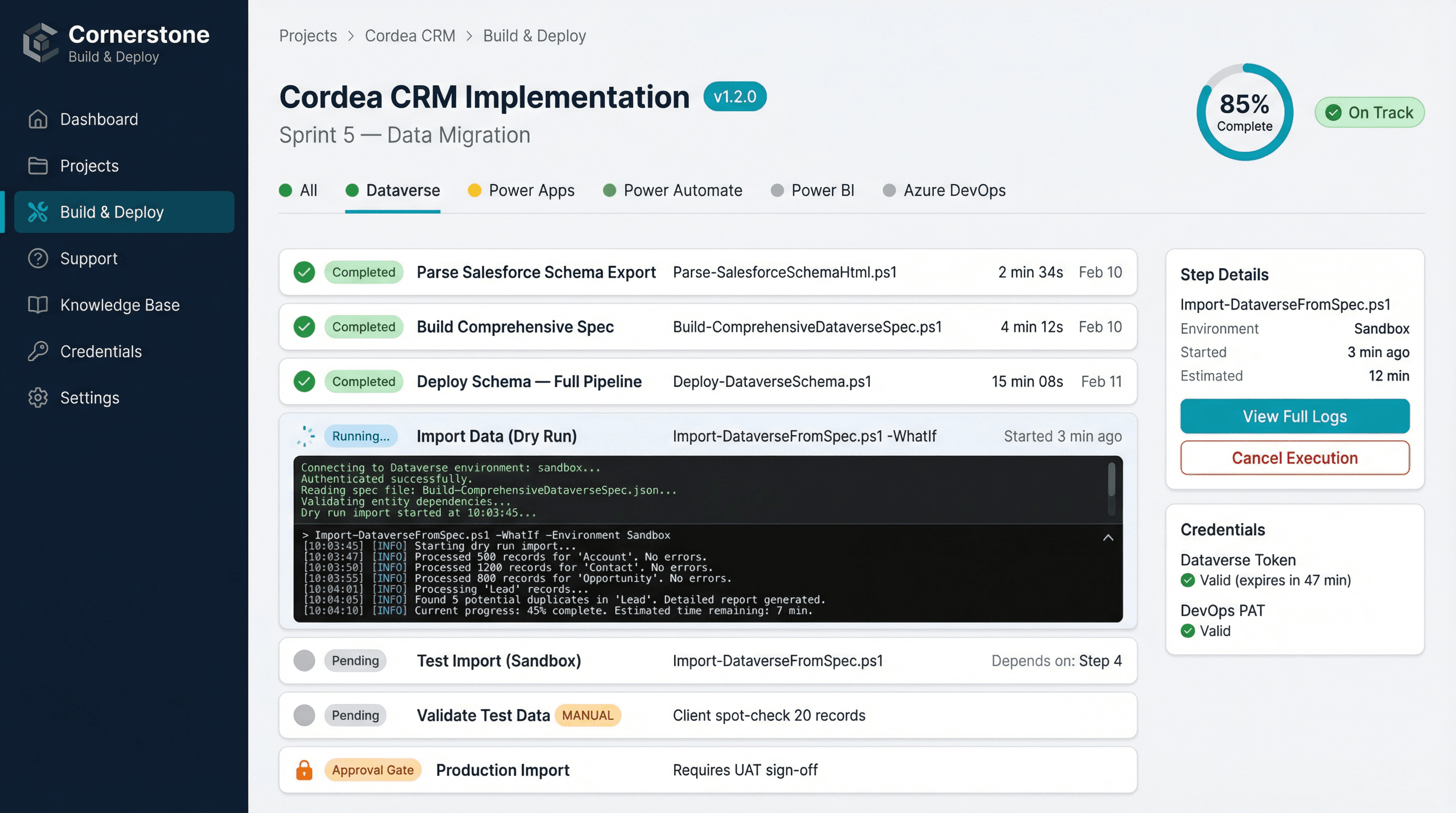
Build follows the plan. Each milestone runs as a discrete agent step — schema deployed, role granted, flow imported, dashboard published — with a live stream of what's happening, and Linear ticket statuses updated as each one closes. When something fails, the agent surfaces *why* in plain English.
When the build ships, the threads keep running.
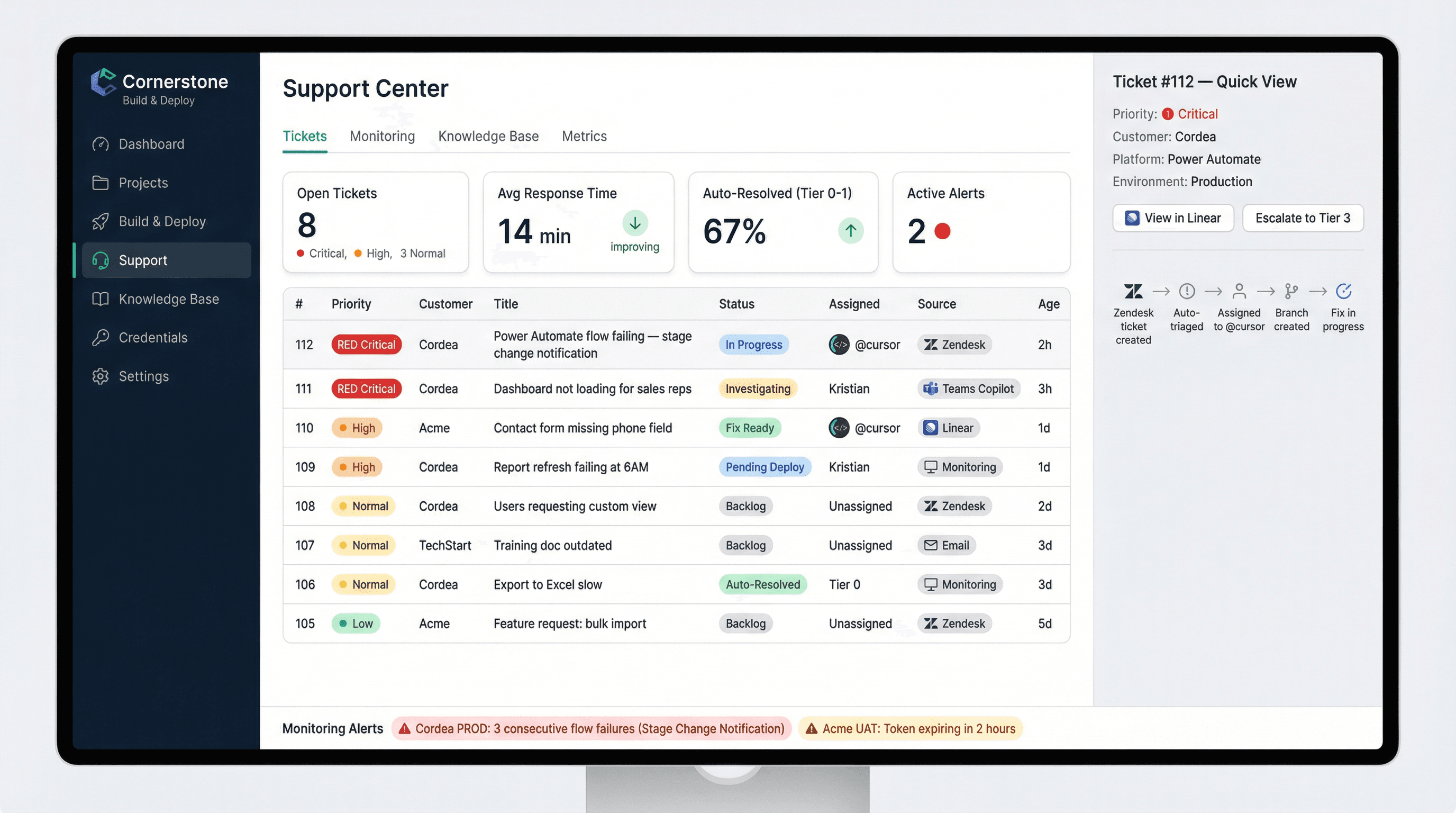
Customer support tickets, monitoring alerts, escalations — all flow back into the same project. The same agents that built it are the ones that triage tier-2 tickets. Auto-triage opens a Linear issue, drafts a fix, runs SF Dynamo against the patch, and — when it passes — pushes. Most issues close before the customer follows up.
Every engagement, isolated. Every learning, shared.
Each customer gets their own repo, their own Threads instance, their own credentials in the Vault. But the agents themselves learn across all of them — anonymized — so the second engagement of any kind is twice as fast, the tenth is ten times. Threads is the only product that gets better the more you use it for different things.
SF Threads works with the rest.
The reason Speedforge isn't just five tools sitting next to each other.
SF Hopper
Hopper opens the new repo, the editors, and the agents Threads spun up.
SF Dynamo
Dynamo runs the verification suite that Threads scaffolded into the repo.
SF Braids
Braids weaves the threads — every plan item Threads drafts becomes a Braids sprint.
SF Focus
Focus aggregates billing per-customer across every Threads engagement.